01 · ImitateiPhone + Android
Imitate a Qari.
Choose a reciter. Recite the same ayah. See your melodic shape and timing against the reference.
ChooseReciteCompare
See the comparison Maqam · Hifz is here
Choose one of 12 Qaris, recite the same passage, and compare your melody, pacing, pauses, and endings. Then use Flow or Hifz Coach to read, repeat, and recall it.
Hifz is available on iPhone and Android.
01 / The practice
Choose a reciter. Recite the same ayah. See your melodic shape and timing against the reference.
Read from the Mushaf, hide the words, and recite from memory. Use guided repetitions when you want more structure.
02 / New in Maqam 2.0
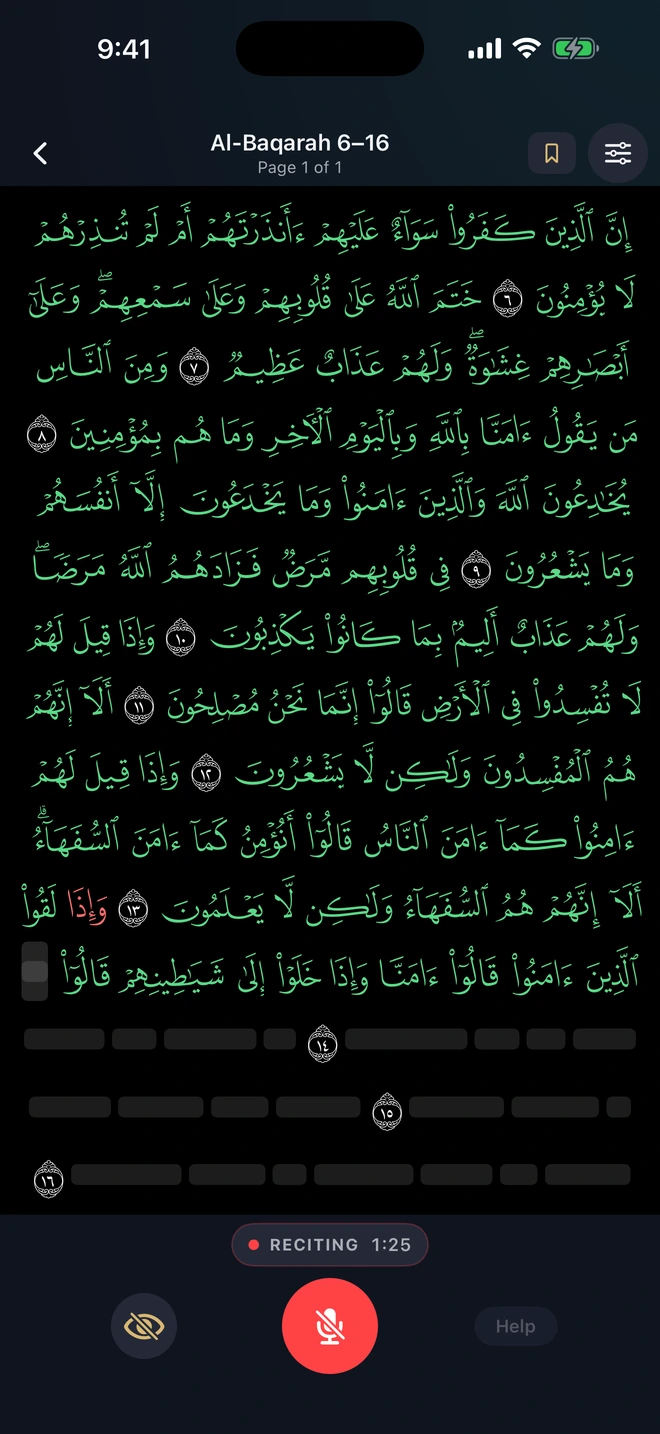
Read, hide, and recite one Mushaf page at a time. Save bookmarks, see coverage by ayah, and return to words marked for revision.
Yellow marks a word that could not yet be verified. Red marks a confirmed miss to return to and review.
The word trail is a reading and recall aid. It does not grade tajweed or certify memorization. Prove is optional and uses the existing Qari-comparison score.
Maqam Pro More Hifz Coach sessions and a repetition count from 1 to 50. Flow has no daily practice limit.
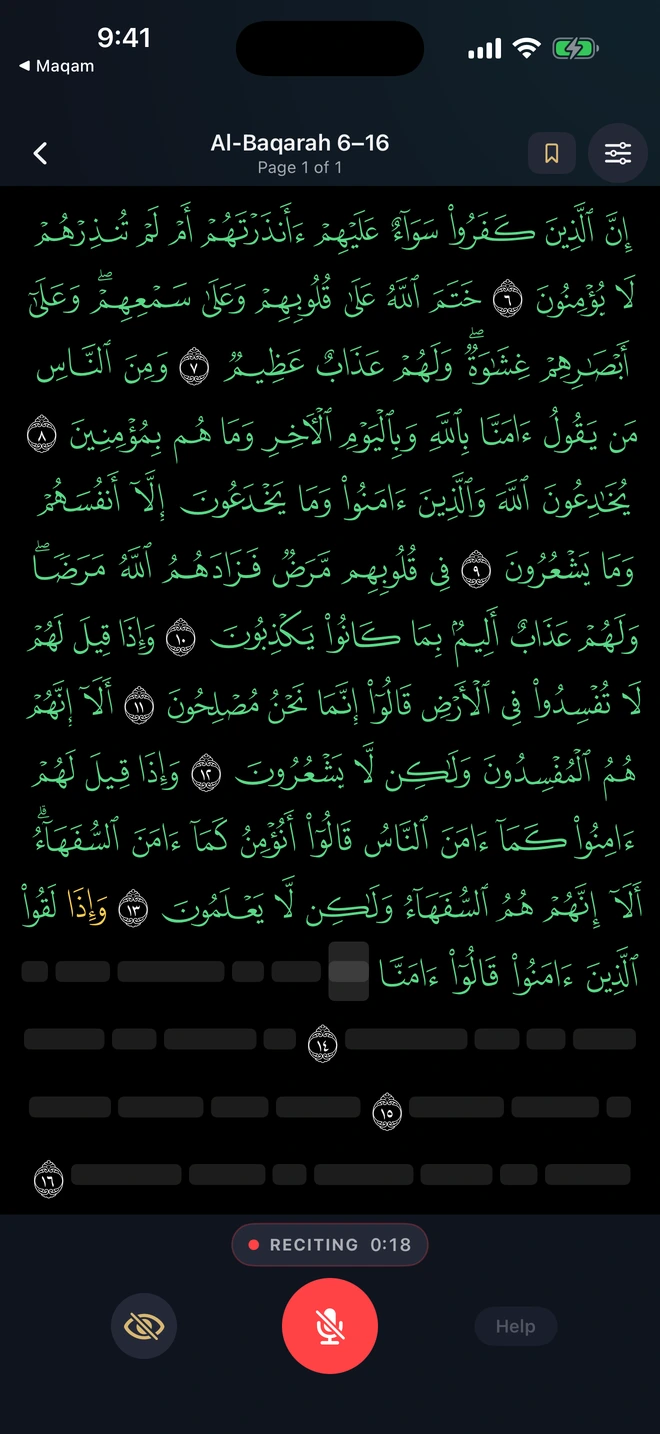
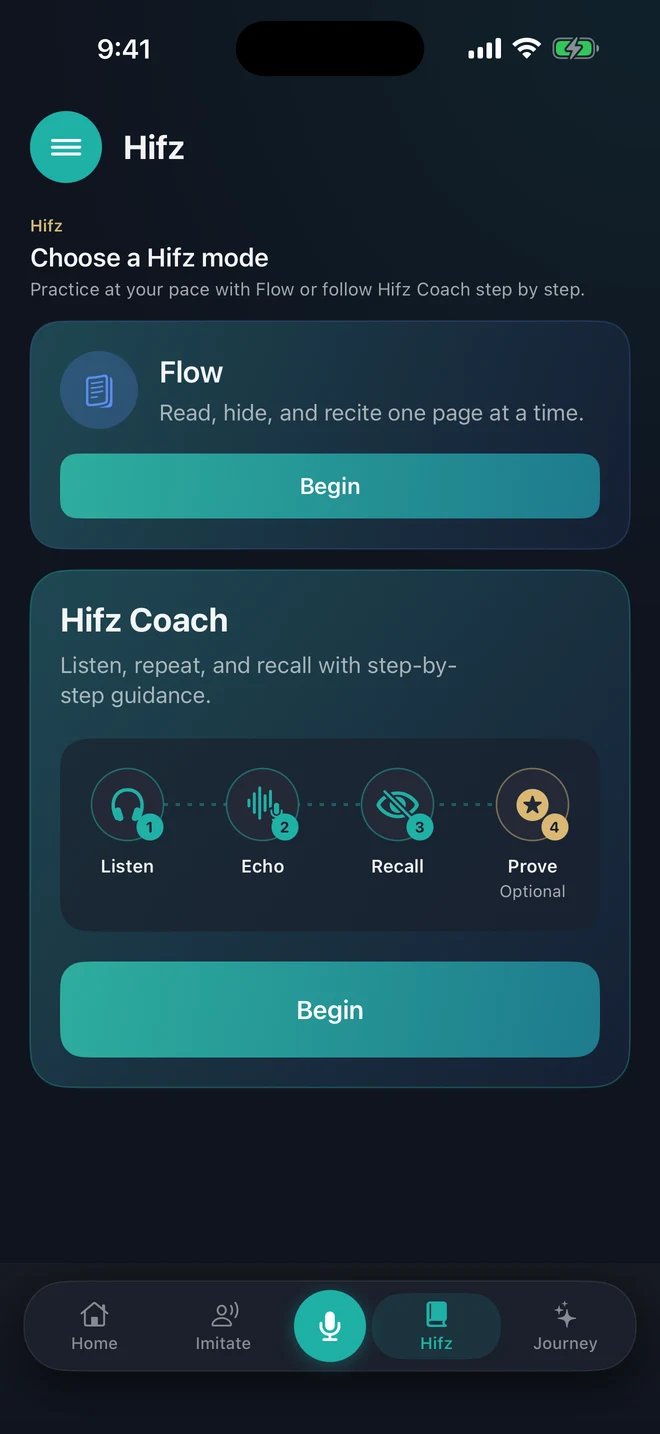
Flow for page-by-page practice. Hifz Coach for guided repetitions: Listen → Echo → Recall → Prove.
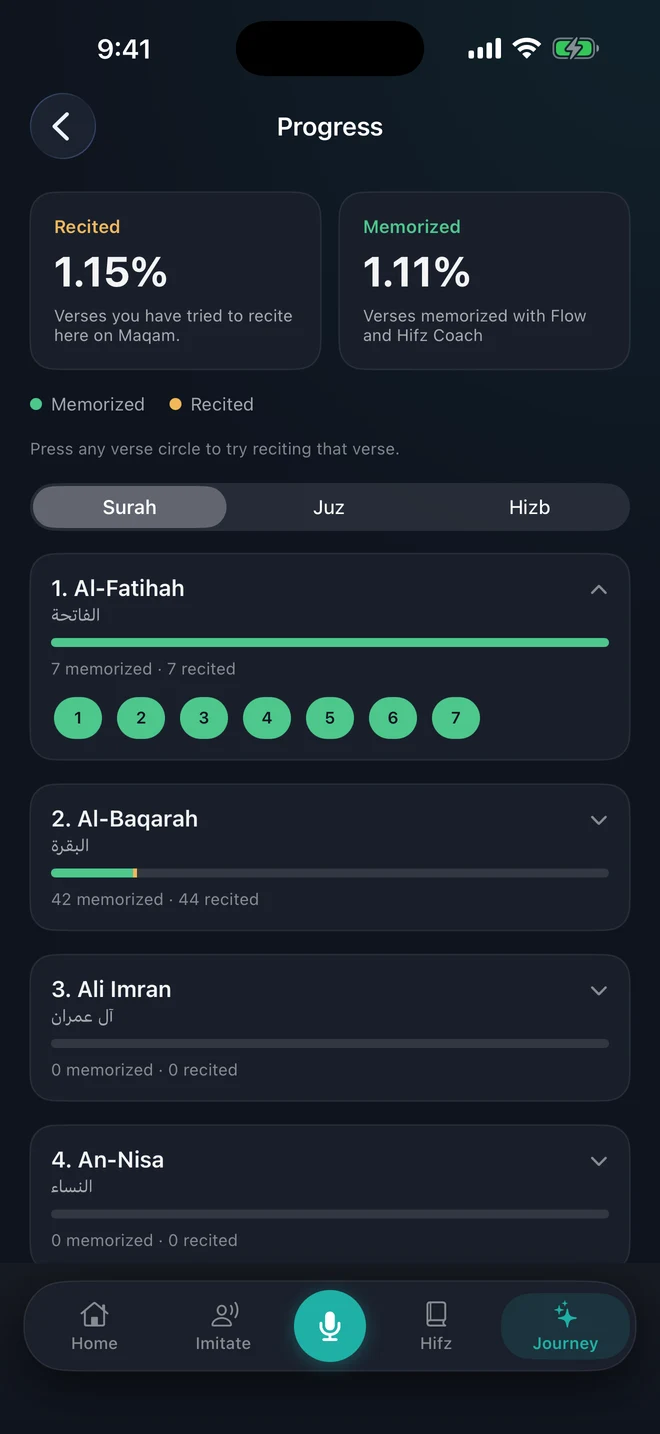
See your memorization coverage. Return to a saved range or review the words that need practice.
Hifz is available on iPhone and Android. Screens shown from the current app.
03 / The comparison
Follow the gold reference and your emerald take. Find the late entry, the pitch drift, and the hold to repeat.
+310 ms after the Qari
40 cents below the reference
Your 0.9 s · Qari 1.8 s
Illustrative comparison. Your results come from your own recording.
04 / Listen to the difference
Start with your overall comparison. Use the fuller breakdown in Maqam Pro to choose what to repeat.
Compare where your pitch rises and falls across each phrase.
Find where you enter late, rush ahead, or slow down.
Compare the placement of pauses and the length of held notes.
Hear how you finish each phrase against the reference.
Stability contributes to the overall comparison; it is not a separate result card.
“What to improve” marks up to five ranked moments on a timeline. Listen to Reference and Mine for each moment, then return to the phrase with a clear practice cue.
Word-level review appears when analysis is available and sufficiently confident.
Training plans, guided drills, Qari Path, and the fuller result breakdown belong to Maqam Pro. Listen, repeat a focused phrase, and review your next take.
Free practice includes an overall score and pitch comparison. Check the app for current limits and subscription details.
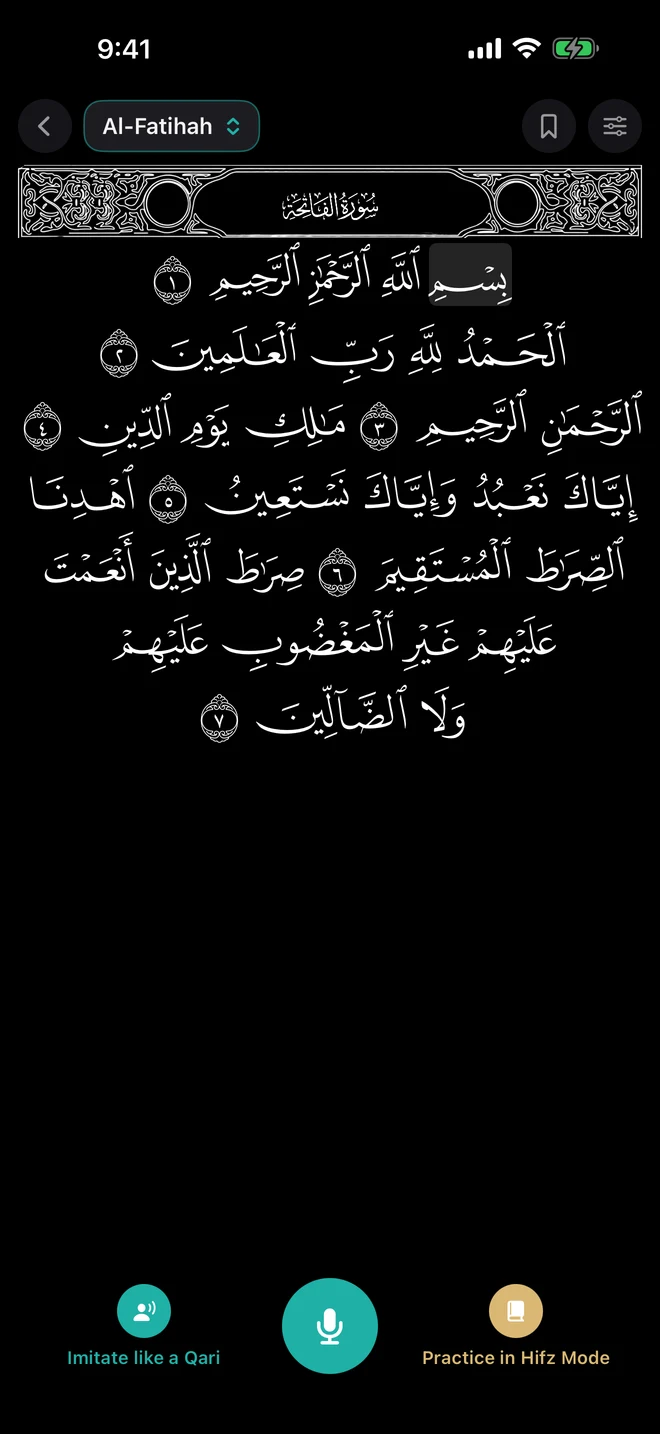
05 / The Mushaf
Keep the ayah at the center of your practice.
Hifz is available on iPhone and Android.
06 / Your journey
Imitate progress follows your comparison scores. See how your practice changes across saved takes.
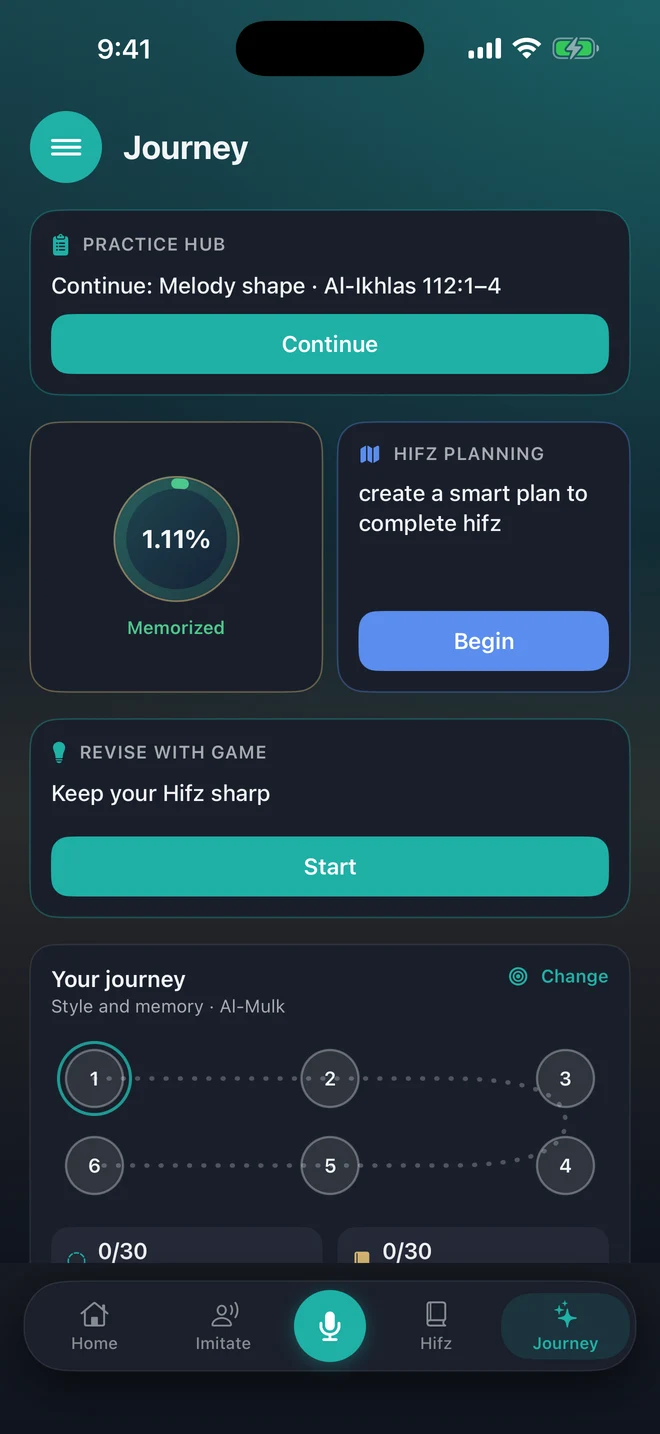
Hifz has its own progress. Memorized ayat receive gold rings on the Surah Map.
The weekly strip shows Imitate and Hifz practice together, with each habit kept distinct.
Compare your first and latest saved takes on the same ayah. Hear each from the recordings on your device.
In Journey: Surah Map · Practice Hub · Memorization · Hifz Planning · Revise with Game · score history.
Maqam Pro Training plans, Qari Path, and the full Surah Map.
07 / Around the practice
Compare one short-surah recording with 12 Qaris. Find the closest melody and timing pattern to practice against.
Alternate ayahs with a Qari. Listen, take your turn, then play the session back.
A recording-environment warning flags background noise while you recite and puts affected results in context.
Return to your current focus, training plans, and next practice action in one place.
Maqam ProChoose a favorite Qari and a surah. Practice from the first ayah to the last.
Maqam ProSave recordings on your device. Listen again when you want to review your recitation.
08 / Trust & adab
Maqam compares acoustic patterns against a selected reference. It does not judge tajweed, issue rulings, or replace a qualified teacher.
The Qur’anic text stays static, legible, and undistorted. The comparison lines describe sound.
09 / Common questions
Maqam compares your acoustic patterns with a selected Qari reference. Results show Melody Shape, Pacing, Pauses & Holds, and Ending Control. Stability contributes to the overall score. This is recitation practice feedback.
Choose a passage, a Qari, and your repetitions. Listen to the reference, echo it with the words visible, then recall it from memory. Prove is an optional fourth step using the existing Qari-comparison score. The word trail helps with reading and recall; it does not grade tajweed or certify memorization.
Flow lets you read, hide, and recite one Mushaf page at a time, with bookmarks, ayah coverage, and revision. Hifz Coach guides you through Listen, Echo, Recall, and optional Prove. Flow has no daily limit. Free Hifz Coach includes one new session per day with two repetitions per step; Pro offers more sessions and counts from 1 to 50.
No. Maqam compares sound against your selected reference. Word tracking is a reading and recall aid, not a judgment of pronunciation rules, validity, or religious certification. Study tajweed with a qualified teacher.
Choose from 12 Qaris: Maher Al-Muaiqly, Yasser Al-Dosari, Mishary Rashid al-Afasy, Abdul Rahman Al-Sudais, Abdul Basit Abdul Samad, Abu Bakr al-Shatri, Ahmad Al-Nufais, Khalifah Al-Tunaiji, Mahmoud Khalil Al-Husary, Muhammad Siddiq Al-Minshawi, Saud Al-Shuraym, Saad Al-Ghamdi. You can listen and practice across all 114 surahs.
Training plans, guided drills, Qari Path, the fuller result breakdown, and the complete Surah Map require Maqam Pro. Pro also expands Hifz Coach sessions and repetition counts. Free practice includes an overall score and pitch comparison. The app shows current subscription options and limits.
Scoring takes are processed and deleted from analysis systems by default. Saved takes and Then vs Now audio stay on your device. Scores and progress can sync after sign-in. Optional product-improvement audio storage needs separate consent. Turning that off stops future archive uploads but does not itself erase stored copies. See the Privacy Policy for retention and deletion requests.
Downloaded Mushaf content and recordings saved on your device can be used offline. Initial downloads, Qari scoring, and automatic word-by-word checking need internet. Hifz Coach can offer manual confirmation when matching cannot start. Downloaded content does not make every practice feature available offline.
Hifz is available on iPhone and Android. Choose Flow or Hifz Coach in the app.
No. Maqam gives you a reference to practice against between lessons. A qualified teacher guides tajweed, pronunciation, and the meaning and validity of your recitation.
Maqam · Return to the ayah
Hifz is available on iPhone and Android.